

Blog
Why Every Restaurant Kitchen Needs Anti-Slip EVA Clogs (And Why Slippery Floors Are Costing You More Than You Think)

Why Every Restaurant Kitchen Needs Anti-Slip EVA Clogs
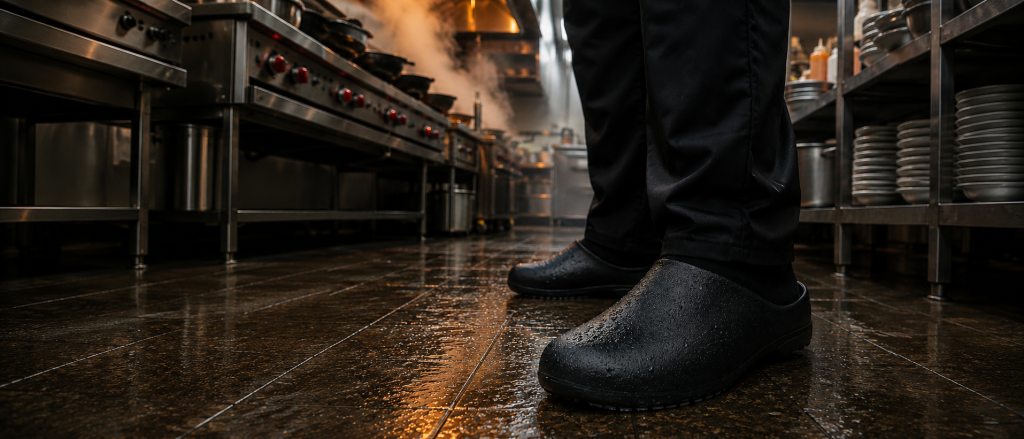
Walk into any commercial kitchen during peak service hours and you’ll notice the same thing: steam rising off the stoves, water splashing near the sink, oil dripping near the fryer, and staff moving fast between stations. Now look down. The floor is almost always wet — and often dangerously glossy.
For restaurant owners and kitchen managers, that combination isn’t just an inconvenience. It’s one of the leading causes of workplace injury in the food service industry. And the simplest, most cost-effective fix isn’t a new floor or a slower kitchen — it’s what’s on your staff’s feet.
The Hidden Hazard in Every Commercial Kitchen
Slip-and-fall incidents are one of the most common workplace accidents in restaurants — and kitchens are ground zero. Between constant water use, steam condensation, oil splatter, and soap residue near dishwashing stations, kitchen floors rarely stay dry for more than a few minutes at a time.
Regular sneakers, sandals, or fabric-based slippers simply aren’t built for this environment. Their soles aren’t designed to grip glossy tile, and fabric materials absorb moisture instead of repelling it — creating a slower, heavier, less stable shoe exactly when staff need speed and balance the most.
What Makes EVA Rubber Clogs Different
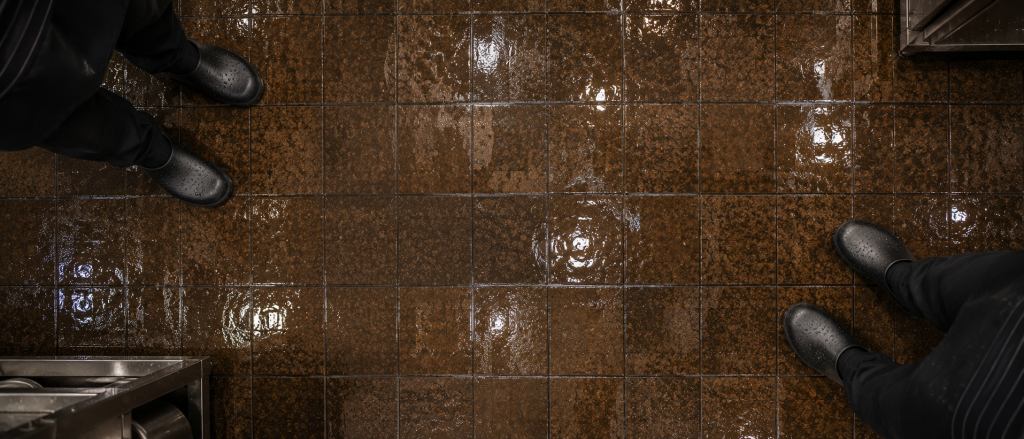
This is where EVA (Ethylene-Vinyl Acetate) rubber footwear earns its reputation as the go-to choice for professional kitchens worldwide. Unlike traditional footwear materials, EVA rubber offers a rare combination of properties that matter most in a kitchen environment:
- Anti-slip grip on wet and glossy surfaces — the textured rubber sole is engineered to maintain traction even when the floor is soaked
- 100% waterproof build — no fabric to soak through, no soggy insoles by the end of a shift
- Lightweight and flexible — won’t slow staff down during a fast-paced service
- Cushioned footbed — reduces fatigue during long hours of standing and walking
- Easy to clean — wipes down in seconds, unlike fabric slippers that trap odor and bacteria
- Durable construction — built to withstand daily wear in high-traffic commercial environments
For kitchens that run 8, 10, or even 12-hour shifts, this isn’t a minor comfort upgrade — it’s a safety requirement.
Before vs. After: The Real Difference Good Footwear Makes
The difference between the right footwear and the wrong footwear isn’t subtle — it’s the difference between a confident, steady kitchen team and a serious accident waiting to happen.
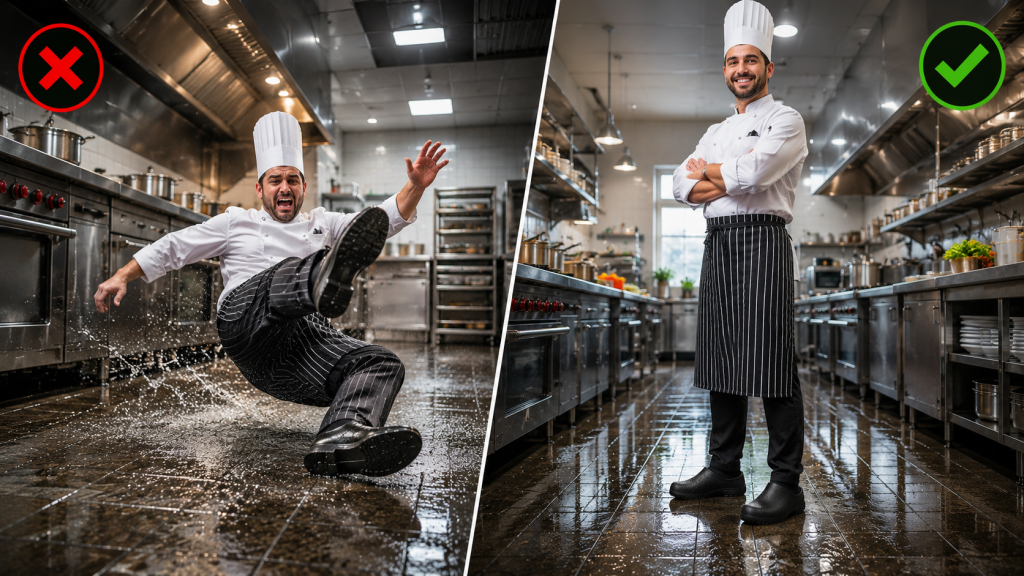
On the left: a chef in standard shoes, caught off guard by a wet patch near the stove — a scenario that plays out in kitchens every single day, often resulting in sprains, bruises, burns from spilled hot liquids, or worse.
On the right: the same environment, but with proper anti-slip clogs. Stable footing, confident posture, and one less variable for kitchen managers to worry about during a busy shift.
A Small Change That Fits Naturally Into Any Kitchen Routine
One of the biggest advantages of switching to anti-slip EVA clogs is how little it disrupts existing routines. There’s no retraining required, no workflow changes — just a simple footwear swap that staff can start using from their very next shift.
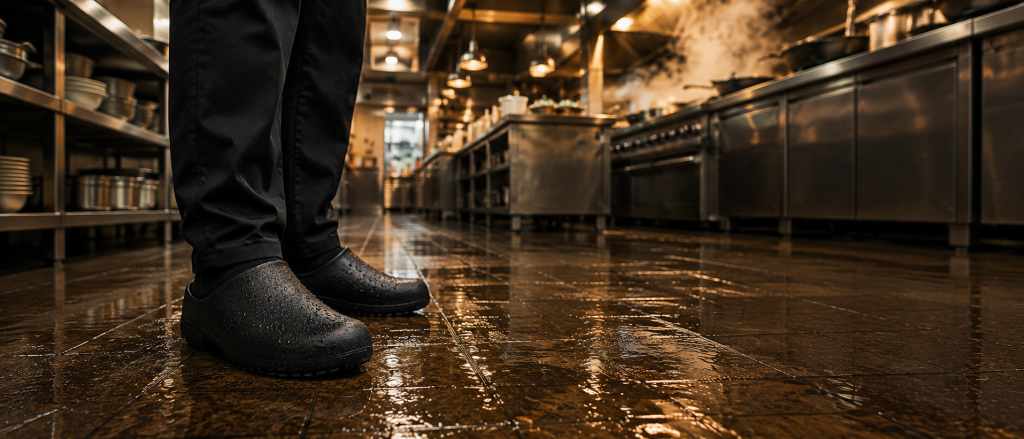
Many kitchen staff describe it as one of those upgrades they didn’t know they needed until they tried it — the kind of small operational change that quietly prevents big problems down the line.
Built for the Realities of a Working Kitchen
A commercial kitchen is one of the most demanding environments for footwear. Heat, moisture, oil, constant movement, and long hours all take a toll on ordinary shoes. Anti-slip EVA clogs are purpose-built to handle exactly this kind of daily pressure.
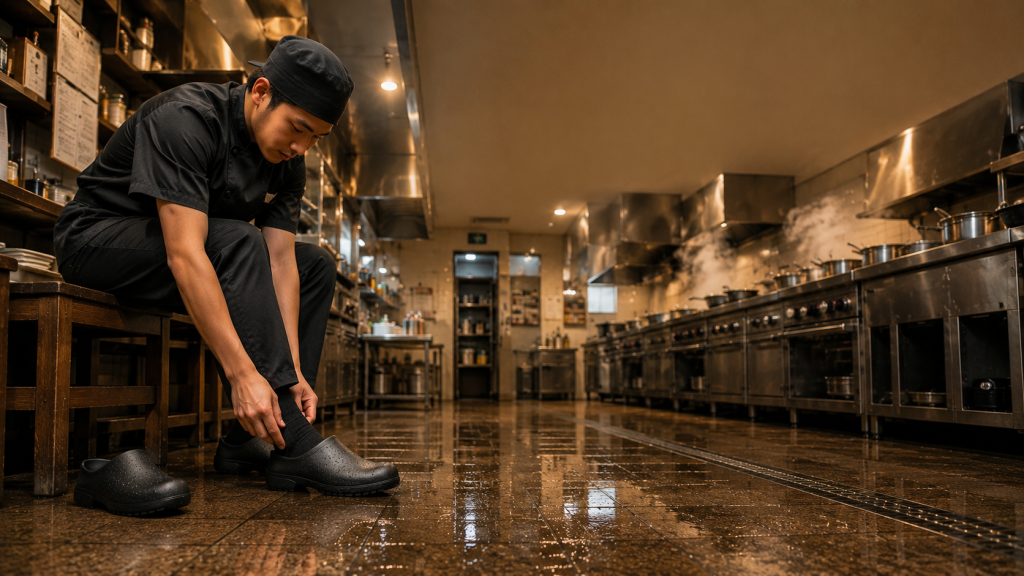
Whether it’s a fine-dining kitchen, a busy hotel restaurant, a cloud kitchen, or a roadside eatery, the hazards are the same — and so is the solution.
Why Restaurant Owners in Bangladesh Are Making the Switch
Bangladesh’s restaurant industry runs on speed, heat, and constant water use — especially during the monsoon months when humidity and wet floors become an everyday reality, not an occasional risk. For kitchen managers and restaurant owners, investing in proper anti-slip footwear for staff isn’t just about compliance — it’s a direct investment in:
- Reduced workplace injuries and downtime
- Lower liability and insurance-related risk
- Improved staff morale and comfort during long shifts
- A visible commitment to staff safety and wellbeing
Compared to the cost of a single workplace injury — medical expenses, lost shifts, potential liability — a pair of durable anti-slip clogs is one of the most affordable safety investments a restaurant can make.
The Cozy Minimal Clog EVA10 — Built for Commercial Kitchen Use
RaymanBD’s Cozy Minimal Clog EVA10 was designed with exactly this kind of demanding environment in mind. Key features include:
- Lightweight, durable EVA rubber construction
- Anti-slip sole that grips both wet and dry surfaces
- Waterproof design — wipes clean in seconds
- Cushioned footbed for all-day comfort during long shifts
- Available in multiple sizes for a proper, secure fit
Whether you’re outfitting an entire kitchen team or replacing worn-out footwear one pair at a time, the EVA10 offers a practical, affordable way to make your kitchen safer — starting today.
Shop the Cozy Minimal Clog EVA10 →
Final Thoughts
Kitchen safety often gets discussed in terms of fire hazards, knife handling, or food hygiene — and rightly so. But the floor beneath your staff’s feet deserves just as much attention. It’s one of the few hazards in a kitchen that’s almost entirely preventable with the right gear.
If your restaurant’s floor gets wet even once a shift, it’s worth asking: is your team wearing the right shoes for it?